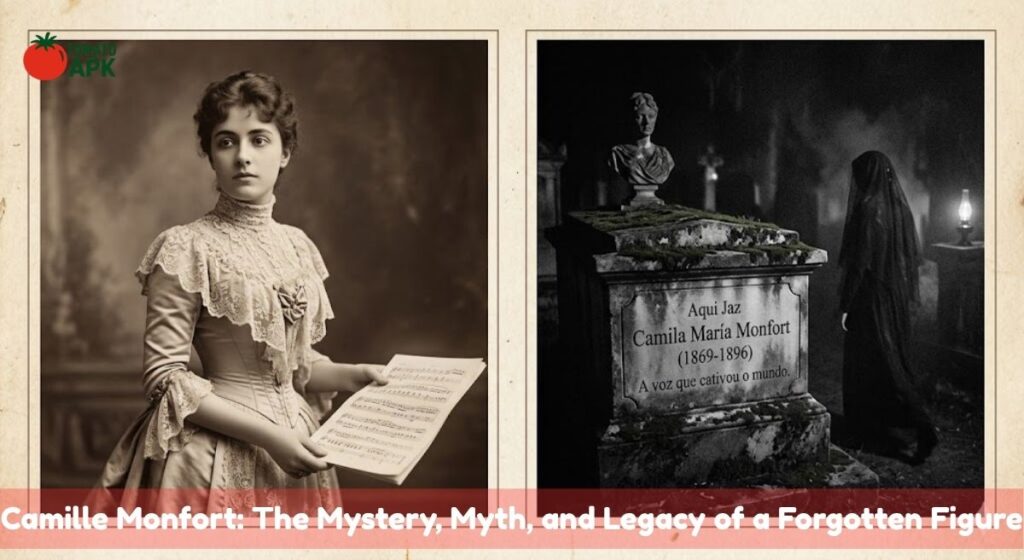
The name Camille Monfort has intrigued historians, storytellers, and curious readers for generations. Though not widely documented in mainstream history books, Monfort’s story lives in fragments—blending fact, rumor, and cultural myth. This ambiguity has made Camille Monfort a fascinating subject for those who enjoy uncovering hidden narratives and exploring lesser-known historical personalities.
Unlike widely recognized figures whose lives are thoroughly recorded, Monfort represents a different kind of legacy—one shaped as much by imagination as by documented evidence. The mystery surrounding the name has led to speculation about identity, influence, and even existence. Whether Monfort was a real person whose records were lost over time or a symbolic figure created through oral traditions remains an open question.
In this article, we will explore the origins, possible historical context, cultural interpretations, and lasting intrigue of Camille Monfort. By examining both the available evidence and the myths that surround the name, we aim to provide a comprehensive understanding of why this figure continues to capture attention today.
The Origins of the Name Camille Monfort
The name Camille Monfort carries a distinctly French tone, suggesting roots in European history, particularly in France. “Camille” is a gender-neutral French name, historically used for both men and women, while “Monfort” likely derives from “Montfort,” a name associated with noble families and geographical locations in medieval France.
This linguistic background has led many researchers to speculate that Monfort may have been linked to aristocracy or at least to a family of some social standing. Names tied to “Montfort” appear in historical records, often associated with military leaders, nobles, and influential figures. However, no definitive documentation directly confirms a historical individual named Camille Monfort within these lineages.
The ambiguity of the name has contributed to its mystique. Some believe it may have been altered over time through translation, transcription errors, or oral storytelling. Others suggest it could be a pseudonym, used either intentionally by an individual or later assigned by storytellers attempting to preserve a narrative.
Historical Context and Speculation
To understand Camille Monfort, it’s helpful to consider the broader historical periods in which such a figure might have existed. Many theories place Monfort somewhere between the late 18th and early 20th centuries—a time of dramatic change in Europe and beyond.
This era saw revolutions, colonial expansion, and significant cultural shifts. If Monfort were a real individual, they may have been connected to these transformations, possibly as a traveler, intellectual, or even an adventurer. The lack of concrete records could suggest a life lived outside official institutions or one that intersected with marginalized or undocumented communities.
Another possibility is that Monfort’s story was overshadowed by larger historical events. Many individuals who played minor but meaningful roles in history were never formally recorded, especially if they did not hold official titles or positions of power.
Camille Monfort in Cultural Narratives
Over time, the name Camille Monfort has appeared in various cultural discussions, often as a symbol rather than a clearly defined individual. In some interpretations, Monfort represents the idea of a forgotten genius—someone whose contributions were overlooked or erased.
In others, the name is associated with mystery and intrigue, appearing in discussions about hidden histories, secret societies, or lost knowledge. These interpretations may not be based on verified facts, but they highlight how powerful storytelling can be in shaping a legacy.
Cultural narratives often fill the gaps left by incomplete historical records. When documentation is scarce, imagination takes over, creating stories that resonate emotionally even if they cannot be proven. Camille Monfort fits perfectly into this category, serving as a canvas for creative interpretation.
The Role of Myth and Legend
One of the most compelling aspects of Camille Monfort is the blending of myth and reality. Stories about Monfort often include elements that are difficult to verify—unusual achievements, mysterious disappearances, or connections to influential figures.
These characteristics are common in legends, where the line between truth and fiction becomes blurred. Myth-making is a natural human tendency, especially when dealing with incomplete information. Over time, stories evolve, incorporating new details and interpretations that reflect the values and interests of each generation.
In the case of Monfort, the myth may be just as important as any historical truth. The stories themselves reveal how people interpret the past and what they find meaningful or intriguing.
Possible Interpretations of Identity
Given the lack of concrete evidence, several theories attempt to explain who Camille Monfort might have been:
A Historical Individual
Some believe Monfort was a real person whose records were lost or never properly documented. This theory suggests that Monfort may have lived an unconventional life, avoiding official institutions that typically preserve historical records.
A Composite Character
Another possibility is that Monfort represents a combination of multiple individuals. Over time, stories from different sources may have merged, creating a single, unified identity.
A Fictional Creation
It’s also possible that Camille Monfort was entirely fictional, created as part of a story or narrative that gained popularity. In this case, the name itself becomes more important than any real-world counterpart.
Each interpretation offers a different perspective, and none can be definitively proven or disproven.
Why Camille Monfort Still Matters Today
In an age where information is easily accessible, the mystery of Camille Monfort stands out. It reminds us that not everything can be neatly categorized or explained. There are still gaps in history, and those gaps invite curiosity and exploration.
Monfort’s story also highlights the importance of storytelling. Even without concrete evidence, narratives can have a lasting impact, shaping how we think about the past and inspiring new ideas.
Additionally, the intrigue surrounding Monfort reflects a broader human fascination with the unknown. People are naturally drawn to mysteries, especially those that challenge conventional understanding.
The Influence of Digital Culture
The internet has played a significant role in reviving interest in figures like Camille Monfort. Online discussions, forums, and articles have brought attention to previously obscure names, allowing them to reach a global audience.
Digital culture thrives on curiosity and discovery, making it the perfect environment for mysteries to gain traction. As more people encounter the name Camille Monfort, new interpretations and theories continue to emerge.
This process demonstrates how history is not static but constantly evolving. Even in the absence of new evidence, the way we understand and interpret the past can change over time.
Challenges in Verifying the Story
One of the biggest obstacles in understanding Camille Monfort is the lack of reliable sources. Without primary documents or credible historical references, it’s difficult to separate fact from fiction.
Historians rely on evidence such as letters, official records, and firsthand accounts to construct accurate narratives. In Monfort’s case, these materials are either missing or have yet to be discovered.
This uncertainty can be frustrating, but it also adds to the allure. The absence of clear answers keeps the mystery alive, encouraging ongoing exploration and debate.
Lessons from the Mystery
The story of Camille Monfort offers several valuable lessons:
- History is incomplete: Not every story is fully recorded or preserved.
- Narratives evolve: Over time, stories can change, blending fact and fiction.
- Curiosity drives discovery: Mysteries encourage people to അന്വേഷ and learn.
These lessons extend beyond Monfort, applying to many other historical and cultural topics.
Conclusion
Camille Monfort remains an enigmatic figure, existing somewhere between history and legend. Whether a real individual, a composite character, or a fictional creation, the name continues to spark curiosity and imagination.
The lack of definitive answers is not a weakness but a strength, allowing for multiple interpretations and ongoing exploration. In a world filled with information, the mystery of Camille Monfort reminds us that some questions remain open—and that those questions can be just as meaningful as the answers.
FAQs About Camille Monfort
Who was Camille Monfort?
Camille Monfort is an enigmatic figure whose identity is not clearly documented. The name is associated with mystery and speculation rather than confirmed historical records.
Is Camille Monfort a real person?
There is no definitive evidence proving that Camille Monfort was a real individual. Some believe the figure existed, while others think it may be fictional or symbolic.
Why is Camille Monfort famous?
Monfort is known primarily for the mystery surrounding the name. The intrigue comes from the lack of information and the various theories about identity and significance.
Where did the name originate?
The name appears to have French origins, with “Camille” being a common French name and “Monfort” possibly linked to historical places or families.
Why do people still talk about Camille Monfort?
The mystery and lack of clear answers make Monfort an interesting topic. People are naturally drawn to unexplained stories and hidden histories.
Could new information about Camille Monfort be discovered?
It’s possible, though unlikely. Unless new historical evidence emerges, the mystery may remain unresolved, continuing to inspire curiosity and speculation.