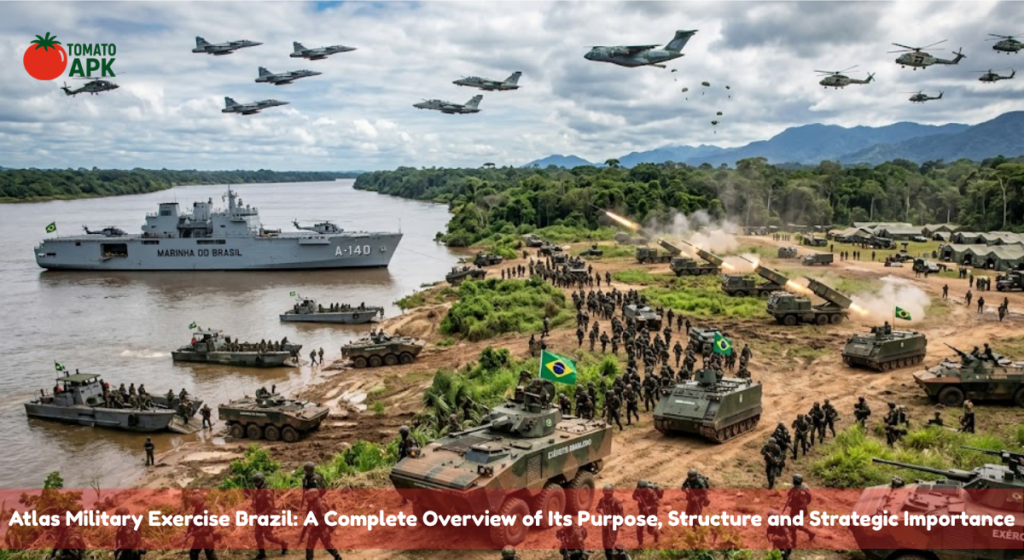
The Atlas military exercise Brazil is often discussed in defense and security contexts as a large-scale multinational or joint training operation conducted within or in collaboration with forces in Brazil. Military exercises like Atlas are designed to strengthen operational readiness, improve coordination between allied forces, and test modern combat strategies under realistic conditions. While the exact structure and participating nations may vary depending on the edition or scenario, the core idea remains consistent: to simulate complex battlefield environments and enhance interoperability between military units.
In modern defense planning, exercises such as Atlas are essential because they allow armed forces to practice responses to both conventional warfare and hybrid threats. These may include cyber warfare, asymmetric conflict, border security operations, and humanitarian missions. Brazil’s strategic position in South America and its vast geographical diversity—ranging from dense Amazon rainforest to urban coastal cities—makes it an ideal location for such large-scale training operations.
The Atlas military exercise Brazil is therefore not just a routine drill. It represents a broader effort to strengthen regional security cooperation, improve military logistics, and test new defense technologies in real-world environments.
Historical Background of the Atlas Military Exercise
The concept of the Atlas military exercise is rooted in the global trend of joint military training programs that became more prominent after the Cold War. As international security threats evolved, countries began to focus more on collaboration rather than isolated defense strategies.
In the context of Brazil and its regional partnerships, military exercises similar to Atlas have historically focused on:
- Border security and anti-trafficking operations
- Peacekeeping mission training
- Disaster response coordination
- Jungle and amphibious warfare training
The Atlas framework is believed to have developed as part of broader multinational cooperation efforts in South America, where countries aim to enhance collective defense readiness. Over time, the exercise has expanded in complexity, incorporating cyber defense simulations, aerial coordination, and naval operations.
This evolution reflects the changing nature of warfare, where traditional battlefield tactics are now combined with technological and intelligence-driven operations.
Objectives of Atlas Military Exercise Brazil
The Atlas military exercise Brazil is designed with several strategic and operational objectives in mind. These objectives go beyond simple training and extend into long-term defense planning.
1. Enhancing Military Coordination
One of the primary goals is to improve coordination between different branches of the armed forces, including army, navy, and air force units. Joint operations require seamless communication, and Atlas provides a controlled environment to test this integration.
2. Strengthening Regional Cooperation
The exercise often involves collaboration between multiple nations or allied forces in South America. This helps build trust, standardize procedures, and improve diplomatic military relations.
3. Testing Modern Warfare Technologies
Advanced technologies such as drones, surveillance systems, cyber defense tools, and satellite communications are often integrated into the exercise scenarios. This ensures that forces are prepared for modern battlefield challenges.
4. Improving Rapid Response Capabilities
Atlas simulations often include emergency scenarios such as natural disasters or sudden military escalations. These drills help improve decision-making speed and logistical efficiency.
5. Training in Diverse Terrain Conditions
Given Brazil’s geographic diversity, the exercise allows forces to train in rainforests, rivers, mountains, and urban environments, making it one of the most realistic training grounds in the world.
Structure and Phases of the Exercise
The Atlas military exercise Brazil is typically organized into multiple phases, each focusing on specific operational goals. While exact details may vary, the general structure includes the following stages:
Phase 1: Planning and Mobilization
This phase involves strategic planning, deployment of troops, and setup of command centers. Military leaders from participating units coordinate objectives, define scenarios, and allocate resources.
Phase 2: Tactical Field Operations
In this stage, ground forces engage in simulated combat operations. These may include:
- Reconnaissance missions
- Controlled engagement scenarios
- Terrain navigation exercises
- Ambush and counter-ambush training
Phase 3: Air and Naval Coordination
Air force units conduct surveillance, air support, and transport missions, while naval forces handle maritime security simulations. Coordination between air and sea units is critical in this phase.
Phase 4: Cyber and Intelligence Operations
Modern exercises like Atlas include cyber warfare simulations, where teams defend against digital attacks or simulate intelligence gathering operations.
Phase 5: Evaluation and Debriefing
After the exercise concludes, commanders analyze performance data, identify weaknesses, and develop improvement strategies for future missions.
Strategic Importance of Atlas Military Exercise Brazil
The strategic importance of the Atlas military exercise Brazil lies in its ability to prepare armed forces for real-world challenges in an increasingly complex global security environment.
Regional Stability
By promoting cooperation between neighboring countries, the exercise contributes to regional stability in South America. It helps reduce misunderstandings and improves communication between military organizations.
Counter-Terrorism Preparedness
Modern military exercises often include counter-terrorism scenarios. Atlas helps forces prepare for potential threats involving organized militant groups or illegal armed activities.
Border Security Enhancement
Brazil’s extensive borders require constant monitoring. Exercises like Atlas improve surveillance strategies and border patrol efficiency.
Humanitarian Assistance Training
Natural disasters such as floods or forest fires are common in the region. The exercise includes humanitarian response simulations to ensure rapid and effective disaster relief.
Technology Used in the Atlas Military Exercise
Technology plays a central role in the Atlas military exercise Brazil. Modern defense training relies heavily on digital systems and advanced equipment.
Simulation Systems
Computer-based war simulation systems are used to recreate battlefield scenarios without real-world risks. These systems help commanders test different strategies in real time.
Drones and UAVs
Unmanned aerial vehicles are used for reconnaissance, surveillance, and target tracking. They provide real-time intelligence to ground units.
Communication Networks
Secure communication systems ensure that different military branches remain connected during operations, even in remote environments.
Cyber Defense Tools
Cybersecurity teams simulate attacks and defenses to protect military communication systems from digital threats.
Environmental and Geographic Challenges in Brazil
Conducting a large-scale exercise in Brazil presents unique environmental challenges that enhance the realism of the training.
Amazon Rainforest Terrain
Dense forests require specialized jungle warfare training, including navigation, survival skills, and stealth operations.
Riverine Operations
Brazil’s extensive river systems demand expertise in amphibious transport and water-based military strategies.
Urban Combat Scenarios
Large cities provide environments for urban warfare simulations, including building clearance and civilian safety operations.
Climate Conditions
High humidity, heavy rainfall, and tropical climates test the endurance and adaptability of military personnel.
Benefits of the Atlas Military Exercise
The Atlas military exercise Brazil offers several long-term benefits for participating forces and regional security frameworks.
- Improved joint operational efficiency
- Enhanced crisis response capabilities
- Better understanding of multinational command structures
- Increased readiness for modern warfare scenarios
- Strengthened diplomatic military relationships
These benefits contribute not only to military preparedness but also to broader geopolitical stability in the region.
Challenges Faced During the Exercise
Despite its advantages, the exercise also presents several challenges:
Logistical Complexity
Coordinating multiple forces across large geographical areas requires extensive planning and resources.
Communication Barriers
Differences in language and military protocols can sometimes create coordination difficulties.
Technological Integration
Ensuring compatibility between different nations’ defense systems can be challenging.
Environmental Risks
Training in dense forests and extreme weather conditions can pose safety risks to personnel.
Future of Atlas Military Exercise Brazil
The future of the Atlas military exercise Brazil is expected to focus even more on technological advancement and international cooperation. As global threats continue to evolve, military training programs will likely include:
- Artificial intelligence-driven battlefield simulations
- Expanded cyber warfare training
- Greater multinational participation
- Increased use of autonomous systems
- Enhanced disaster response coordination
These developments will ensure that the exercise remains relevant in an era of rapidly changing defense strategies.
FAQs
1. What is the Atlas military exercise Brazil?
The Atlas military exercise Brazil is a large-scale training operation designed to improve coordination, readiness, and cooperation among military forces in Brazil and potentially allied nations.
2. Which countries participate in the exercise?
Participation may vary depending on the edition, but it often involves Brazil and other regional or international partners engaged in defense cooperation.
3. What is the main purpose of the Atlas exercise?
The main purpose is to enhance military readiness, improve joint operations, and test modern warfare strategies in realistic environments.
4. Where is the exercise conducted?
It is typically conducted across different regions of Brazil, including jungle, river, urban, and coastal environments.
5. Does the exercise include cyber warfare training?
Yes, modern versions of such exercises often include cyber defense and digital warfare simulations.
6. Why is Brazil chosen for this exercise?
Brazil’s diverse geography and strategic location make it ideal for testing a wide range of military operations and scenarios.
Conclusion
The Atlas military exercise Brazil represents a critical component of modern defense training, combining traditional combat drills with advanced technological simulations. Conducted in the diverse environments of Brazil, it serves as a platform for improving military coordination, strengthening regional partnerships, and preparing forces for complex global threats.
As warfare continues to evolve, exercises like Atlas will remain essential in ensuring that armed forces are not only well-trained but also adaptable, technologically equipped, and ready for any challenge that may arise.