Fast food is often associated with convenience, affordability, and speed—but for people who need or choose a gluten-free diet, it can feel like a risky territory. Gluten, a protein found in wheat, barley, and rye, is present in many breaded, fried, and processed foods served at fast food restaurants. However, the good news is that Gluten-Free Fast Food options are becoming more common as awareness of celiac disease and gluten sensitivity increases.
This article explores everything you need to know about gluten-free fast food, including what it means, where to find it, how to order safely, and what to watch out for.
Understanding Gluten-Free Fast Food
Gluten-free fast food refers to meals offered by fast food restaurants that do not contain gluten or have been carefully prepared to avoid cross-contamination. This is especially important for people with:
- Celiac disease (an autoimmune disorder triggered by gluten)
- Non-celiac gluten sensitivity
- Wheat allergies
Eating even small traces of gluten can cause severe symptoms for some individuals, so caution is essential.
Why Gluten Is Common in Fast Food
To understand the challenge, it helps to know why gluten is everywhere in fast food:
1. Buns and Bread
Most burgers, sandwiches, and wraps rely on wheat-based bread products.
2. Breading and Batter
Chicken nuggets, fried chicken, and fish are often coated with wheat flour.
3. Sauces and Dressings
Many sauces use flour as a thickener.
4. Cross-Contamination
Even foods that don’t contain gluten can become contaminated during cooking in shared fryers or preparation areas.
Growing Demand for Gluten-Free Fast Food
In recent years, the demand for it has increased significantly. This is due to:
- Rising awareness of celiac disease
- More people are adopting gluten-free diets for health reasons
- Improved labeling and transparency from restaurants
- Pressure from consumers for allergy-friendly menus
Popular Gluten-Free Fast Food Options
While availability varies by location, many fast food chains offer safe choices if you know what to look for.
Burgers Without the Bun
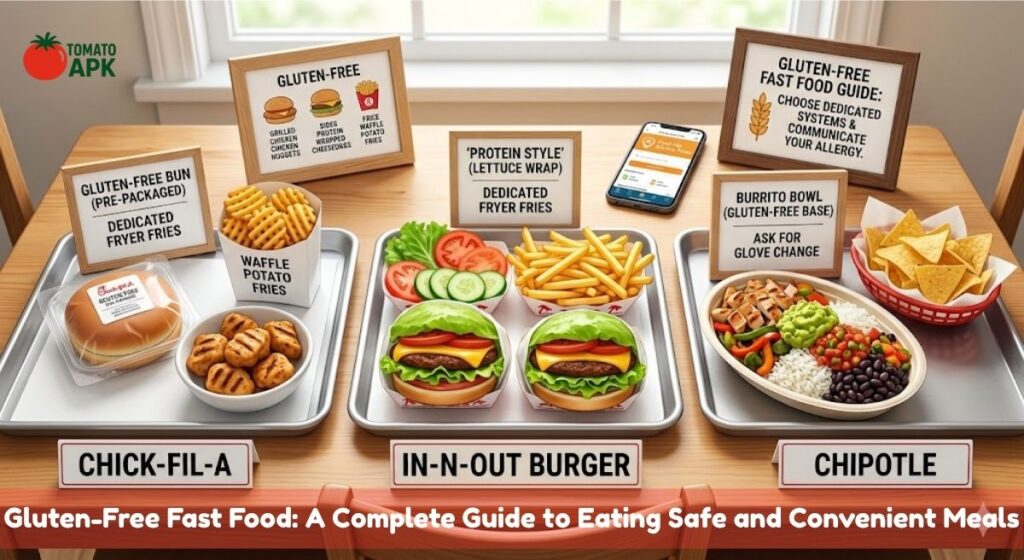
Many restaurants allow you to order burgers without the bun. You can often pair them with:
- Lettuce wraps
- Side salads
- Gluten-free condiments (must be verified)
Grilled Chicken Options
Grilled chicken (without breading) is often a safer choice compared to fried versions.
Salads
Salads can be gluten-free if you:
- Avoid croutons
- Choose gluten-free dressing
- Confirm no cross-contamination
Rice and Bowl Meals
Some chains offer rice bowls or burrito bowls, which can be naturally gluten-free if ingredients are chosen carefully.
Fries and Sides
Some fries are gluten-free by ingredients but may be cooked in shared fryers. Always confirm with the restaurant.
Common Fast Food Items That Are NOT Gluten-Free
Even if they look safe, many items contain hidden gluten:
- Breaded chicken sandwiches
- Onion rings
- Regular buns and wraps
- Certain soups and gravies
- Some flavored fries and seasoning mixes
- Desserts like cookies and cakes
Always double-check before ordering.
How to Order Gluten-Free Fast Food Safely
Eating gluten-free at fast food restaurants requires careful communication and awareness.
1. Ask About Ingredients
Don’t assume anything is safe. Ask staff for allergen information.
2. Mention Cross-Contamination
Clearly state that you need your food prepared without cross-contact with gluten.
3. Check Online Menus
Many restaurants now provide allergen menus online.
4. Stick to Simple Foods
The fewer ingredients, the lower the risk.
5. Avoid Shared Fryers
Foods cooked in shared oil can be contaminated with gluten.
Best Gluten-Free Fast Food Chains
Many major fast food brands have started offering gluten-free options. While menus vary by country, here are common examples:
Burger Chains
- Bunless burgers
- Lettuce-wrapped options
- Side salads and fries (check preparation methods)
Chicken Chains
- Grilled chicken meals
- Some salads and sides
Mexican Fast Food
- Burrito bowls without tortillas
- Rice, beans, and meat combinations
Salad Chains
- Fully customizable salads
- Gluten-free dressings available
Hidden Risks of Gluten-Free Fast Food
Even when items are labeled gluten-free, risks remain:
Cross-Contact in Kitchens
Shared surfaces, grills, and fryers can introduce gluten.
Incorrect Staff Handling
Not all employees may fully understand gluten-free preparation.
Misleading Labels
Some “gluten-free” items may still contain trace amounts within legal limits.
Regional Differences
A chain may offer gluten-free options in one country but not in another.
Benefits of Gluten-Free Fast Food
Despite challenges, it has several advantages:
Convenience
You don’t need to cook or prepare meals yourself.
Accessibility
More restaurants are offering safe options than ever before.
Variety
You can enjoy burgers, salads, and bowls without feeling restricted.
Social Inclusion
Eating out with friends becomes easier and more enjoyable.
Tips for Maintaining a Gluten-Free Fast Food Lifestyle
If you frequently eat fast food while staying gluten-free, consider these tips:
Learn Safe Menu Items
Familiarize yourself with what you can safely eat at your favorite chains.
Carry Emergency Snacks
This helps avoid risky choices when options are limited.
Use Mobile Apps
Some apps help identify gluten-free restaurant options and reviews.
Stick to Trusted Locations
Certain branches may be more careful with allergen protocols.
Read Reviews from Other Gluten-Free Eaters
Community feedback can help identify safe choices.
Gluten-Free Fast Food at Home vs. Restaurants
While eating out is convenient, it’s worth comparing with homemade alternatives:
Fast Food Pros
- Quick and easy
- No preparation required
- Wide availability
Fast Food Cons
- Risk of cross-contamination
- Limited customization
- Higher cost
Home Cooking Pros
- Full control over ingredients
- Zero cross-contamination risk
- Healthier options
Home Cooking Cons
- Time-consuming
- Requires planning
Future of Gluten-Free Fast Food
The future looks promising for gluten-free diners. Many trends are shaping the industry:
- Expanded allergen labeling laws
- Dedicated gluten-free kitchen zones in some chains
- Increased availability of gluten-free buns and wraps
- More plant-based and naturally gluten-free menu items
- Greater awareness among staff and customers
As demand grows, fast food is slowly becoming more inclusive.
Frequently Asked Questions (FAQs)
1. Is fast food ever truly gluten-free?
Yes, but only if it is carefully prepared and free from cross-contamination. Always verify with the restaurant.
2. Can I eat fries at fast food restaurants on a gluten-free diet?
Sometimes. Fries made from potatoes are naturally gluten-free, but they may be cooked in shared fryers.
3. Are gluten-free buns available at fast food chains?
Some chains offer gluten-free buns, but availability depends on location.
4. What is the safest fast food option for gluten-free eaters?
Grilled proteins, salads without croutons, and rice bowls are generally safer choices.
5. How can I avoid cross-contamination?
Clearly inform staff, choose simple menu items, and avoid fried foods in shared oil.
6. Is “wheat-free” the same as “gluten-free”?
No. Wheat-free does not always mean gluten-free, as barley and rye still contain gluten.
7. Can people with celiac disease eat fast food?
Yes, but they must be extremely cautious and choose restaurants with strong allergen protocols.
Conclusion
Gluten-free fast food is no longer a rare or impossible option. While challenges like cross-contamination and limited menu choices still exist, the fast food industry is slowly adapting to meet the needs of gluten-sensitive customers. With careful ordering, awareness of ingredients, and smart choices, it is possible to enjoy convenient meals without compromising health.
As awareness continues to grow, the future of it looks more inclusive, safer, and more diverse—making dining out easier for everyone.