
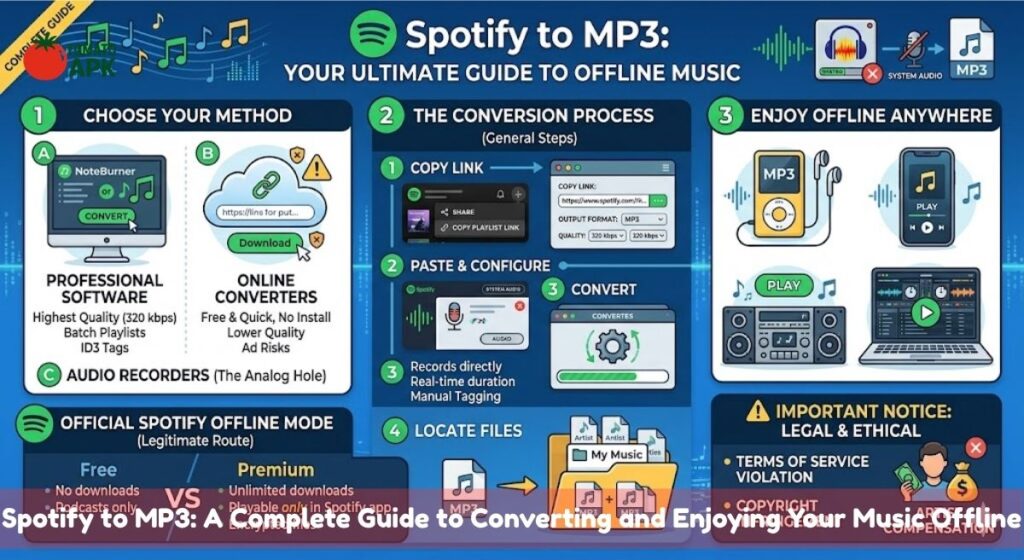
The concept of Spotify to MP3 has gained significant attention among music lovers who want greater control over their audio files. Streaming platforms have transformed how people listen to music, offering instant access to millions of songs. However, they often come with limitations such as internet dependency, subscription requirements, and restricted file access. This is where the idea of converting Spotify tracks into MP3 format becomes appealing.
MP3 is one of the most widely supported audio formats in the world, compatible with nearly every device, from smartphones to car audio systems. Converting music into MP3 allows users to listen offline, transfer files easily, and maintain a personal music library. Despite these advantages, it’s important to understand both the technical process and the legal considerations involved. This article explores everything you need to know about spotify to mp3, including how it works, the tools available, benefits, drawbacks, and frequently asked questions.
What Does “Spotify to MP3” Mean?
The term “spotify to mp3” refers to the process of converting music streamed from Spotify into downloadable MP3 files. Spotify itself does not provide an option to export tracks as MP3 files. Instead, it uses a protected streaming format to prevent unauthorized distribution. As a result, users rely on third-party tools or software to capture and convert audio into MP3 format.
This process can involve recording audio in real-time or extracting data through specialized applications. Once converted, the MP3 files can be stored locally on your device and played without needing the Spotify app or an internet connection. While this may sound straightforward, the process involves specific technical steps and considerations regarding audio quality and file integrity.
Why People Want Spotify to MP3
There are several reasons why users search for spotify to mp3 solutions. One of the main motivations is offline access without restrictions. Although Spotify offers offline playback for premium users, the downloaded tracks remain locked within the app. Converting them to MP3 removes these limitations.
Another reason is compatibility. MP3 files can be transferred to devices that do not support Spotify, such as older MP3 players or certain car stereos. Additionally, users may want to create backups of their favorite songs or use them in personal projects like video editing or presentations. For many, it’s about having complete ownership and flexibility over their music collection.
How Spotify Protects Its Music
Spotify uses Digital Rights Management (DRM) technology to protect its content. This system ensures that songs can only be played within the Spotify app and prevents direct downloading as MP3 files. DRM encryption restricts copying, sharing, or modifying the audio files.
When you download songs for offline listening through Spotify, they are stored in a proprietary format, not as standard audio files. This is why you cannot simply locate them on your device and convert them directly. To achieve spotify to mp3 conversion, external tools must bypass or work around these protections, which raises both technical and legal concerns.
Methods to Convert Spotify to MP3
There are several methods available for converting Spotify tracks into MP3 format. Each method varies in complexity, quality, and legality.
One common approach is using audio recording software. These tools capture the sound output from your system while a song is playing. The recorded audio is then saved as an MP3 file. While simple, this method can be time-consuming and may result in lower quality depending on your settings.
Another method involves dedicated conversion software. These programs are designed specifically for spotify to mp3 conversion and often provide features like batch processing, high-quality output, and metadata retention. However, they may require installation and sometimes come with paid versions for full functionality.
Online converters are also available, allowing users to paste a track or playlist link and receive MP3 files. These are convenient but may have limitations in terms of file size, speed, and reliability.
Step-by-Step Guide to Spotify to MP3 Conversion
To better understand the process, here is a general step-by-step approach:
First, choose a reliable conversion tool or software that suits your needs. Make sure it supports high-quality output and has positive user feedback.
Next, copy the Spotify track or playlist link you want to convert. Most tools will require this link as input.
Then, paste the link into the converter and select MP3 as the output format. You may also be able to adjust settings such as bitrate and audio quality.
After that, start the conversion process. Depending on the tool, this may take a few seconds or several minutes.
Finally, download the converted MP3 files and store them on your device. You can now play them using any compatible media player.
Advantages of Converting Spotify to MP3
One of the biggest advantages of spotify to mp3 conversion is flexibility. MP3 files can be played on virtually any device without restrictions. This makes it easier to enjoy music anytime, anywhere.
Another benefit is permanent access. Unlike streaming services that require subscriptions, MP3 files remain accessible even if you cancel your account.
Additionally, users can organize their music library according to their preferences. They can edit metadata, create custom playlists, and transfer files across devices without limitations.
For content creators, MP3 files can be used in projects such as videos, podcasts, or presentations, provided they comply with copyright laws.
Disadvantages and Risks
Despite its benefits, spotify to mp3 conversion comes with certain drawbacks. One major concern is legality. Converting copyrighted music without proper authorization may violate terms of service and copyright laws.
Another issue is audio quality. Some conversion methods may result in reduced sound quality, especially if the original stream is compressed or if the recording settings are not optimal.
Security is also a concern. Many online converters and free tools may contain malware, intrusive ads, or hidden risks. Users should be cautious when selecting software and avoid suspicious platforms.
Finally, the process can be time-consuming, particularly when converting large playlists or albums.
Legal Considerations
Understanding the legal aspects of spotify to mp3 is crucial. Spotify’s terms of service generally prohibit downloading or distributing content outside the platform. Converting tracks into MP3 format without permission may violate these terms.
In some regions, personal use may be tolerated under certain conditions, but distributing or sharing converted files is usually illegal. It’s important to respect copyright laws and ensure that any usage complies with local regulations.
If you need music for professional or commercial purposes, consider using licensed sources or royalty-free music platforms to avoid legal complications.
Tips for High-Quality MP3 Conversion
To achieve the best results when converting Spotify to MP3, follow these tips:
Use a high-quality converter that supports bitrates of at least 320 kbps. This ensures better sound clarity and detail.
Avoid multitasking during recording if you are using an audio capture method. Background noise or interruptions can affect the output.
Check metadata settings to ensure that song titles, artist names, and album details are correctly saved.
Always scan downloaded files for malware to ensure your device remains सुरक्षित.
By following these practices, you can improve both the quality and safety of your conversions.
Alternatives to Spotify to MP3
If you are hesitant about spotify to mp3 conversion, there are alternative options available. Many music platforms allow users to purchase and download songs in MP3 format legally.
Another option is using Spotify’s offline mode with a premium subscription. While it doesn’t provide MP3 files, it allows you to listen without an internet connection.
Cloud-based music libraries are also a good alternative. They enable you to store and access your music across multiple devices without needing local files.
Exploring these options can help you find a solution that meets your needs while staying within legal boundaries.
Future of Music Consumption
The demand for spotify to mp3 reflects a broader trend in music consumption. Users are seeking more control, flexibility, and ownership over their digital content.
As technology evolves, streaming platforms may introduce new features that address these needs, such as improved offline access or enhanced file management options.
At the same time, the industry continues to prioritize copyright protection and fair compensation for artists. Balancing user convenience with legal and ethical considerations will remain a key challenge in the future of digital music.
Conclusion
Spotify to mp3 conversion offers a practical solution for users who want greater control over their music. It provides flexibility, offline access, and compatibility across devices. However, it also comes with challenges, including legal risks, quality concerns, and security issues.
By understanding the process, choosing reliable tools, and respecting copyright laws, users can make informed decisions about how they manage their music. Whether you choose to convert tracks or explore alternative options, the key is to prioritize both convenience and responsibility.
FAQs
1. Is it legal to convert Spotify to MP3?
It depends on your location and how you use the files. Personal use may be allowed in some cases, but distributing or sharing converted files is generally illegal and violates Spotify’s terms.
2. Can I convert Spotify playlists to MP3?
Yes, many tools support playlist conversion. However, the process may take longer depending on the number of tracks.
3. What is the best quality for MP3 files?
A bitrate of 320 kbps is considered high quality and provides better sound clarity compared to lower bitrates.
4. Do I need a premium account for conversion?
Not always, but some tools may work better with a premium account due to fewer playback restrictions.
5. Are online Spotify to MP3 converters safe?
Some are safe, but others may pose security risks. Always use trusted platforms and scan files before downloading.
6. Can I use converted MP3 files for commercial purposes?
Generally, no. Using copyrighted music for commercial purposes without permission can lead to legal issues.
7. Why can’t I download MP3 directly from Spotify?
Spotify uses DRM protection to prevent unauthorized downloading and distribution of its content.
8. Is there any loss in audio quality during conversion?
It depends on the method used. High-quality converters can preserve audio quality, while recording methods may result in some loss.


